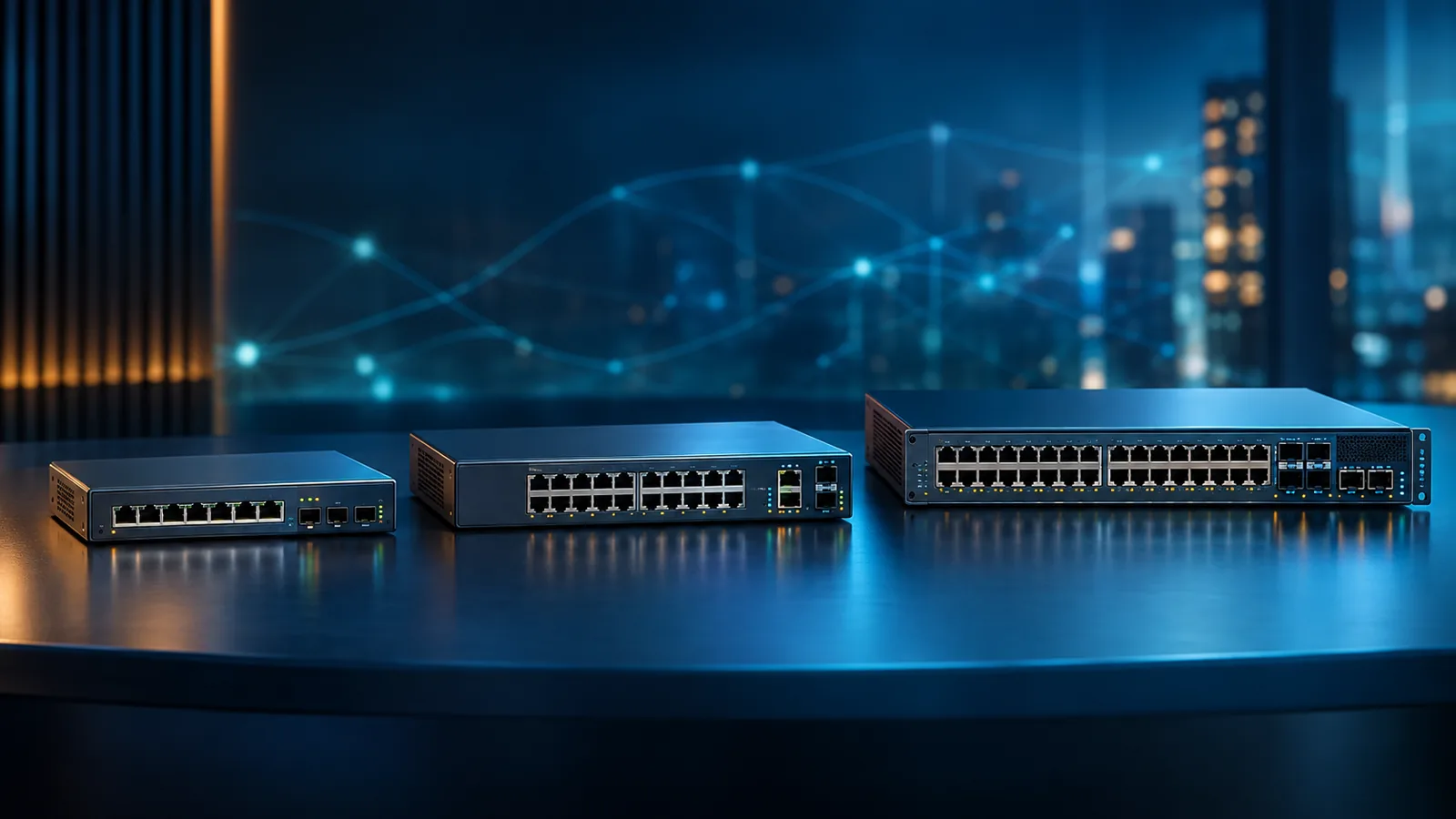
Juniper Mist AI Networking and Licensing Explained

Juniper Mist keeps showing up next to EX switches and wireless APs on quotes. Here is what the Mist AI cloud platform actually does, and how its per-device subscription licensing works.
Key Points
- Juniper Mist is a cloud-based, AI-driven network management platform, not a piece of hardware - it manages Juniper wireless APs, EX switches, and SRX firewalls from one interface.
- Marvis, Mist's virtual network assistant, uses AI to proactively detect problems and answer plain-language questions about the network instead of requiring manual log-digging.
- Mist licensing is a per-device cloud subscription with a term length (commonly 1, 3, or 5 years) - the hardware and the Mist subscription are almost always separate line items.
- Different hardware families use different Mist subscription tiers: wireless APs, EX switches, and SRX firewalls (WAN Assurance) each have their own subscription SKUs.
- Compared to traditional on-prem network management, Mist trades local infrastructure and manual correlation for a cloud service and continuous AI-driven analysis - conceptually different, not just a feature upgrade.
If you have priced out a Juniper wireless access point, an EX-series switch, or an SRX firewall recently, there is a good chance "Mist" showed up somewhere on the quote - either as a hardware line, a subscription SKU, or both. For buyers coming from a traditional on-prem management background, that raises a fair question: is Mist a product, a feature, or a separate purchase you can skip? This guide breaks down what Juniper Mist actually is, how its AI-driven approach to network management works, and how the subscription licensing that comes with it is structured.
What Is Juniper Mist?
Juniper Mist is Juniper Networks' cloud-based, AI-driven network management platform. It is not a switch, an access point, or a firewall - it is the software layer that operates and monitors that hardware. Mist began as a wireless-focused startup that Juniper acquired in 2019, and since then Juniper has extended the same cloud-AI architecture across wired switching (EX series), SD-WAN and security (SRX series), and, more recently, access control and network access assurance. The result is that "Mist" today refers less to a single wireless product and more to Juniper's overall cloud management architecture, branded across the company's portfolio as Mist AI or, in Juniper's newer marketing language, the "AI-Native Networking Platform."
Practically, this means that instead of logging into a local controller appliance, an on-box web GUI, or a fragmented set of element managers for wireless, wired, and WAN separately, a network team logs into one cloud console (https://globalpricelist.com/juniper-mist) that shows the wireless network, the wired switching layer, and the WAN/SD-WAN edge together, using the same telemetry pipeline and the same AI engine underneath all three.
What Mist Actually Does
Mist's core value proposition is applying artificial intelligence and machine learning to the mountain of telemetry a modern network generates - client connection events, radio frequency data, switch port statistics, WAN path performance - so that problems are surfaced (and in many cases explained or auto-remediated) before a help desk ticket ever gets filed. That shows up in three connected pieces: the Marvis virtual network assistant, wireless and wired assurance, and WAN Assurance for SD-WAN.
Marvis Virtual Network Assistant
Marvis is Mist's AI-driven virtual network assistant, and it is the piece most often referenced when people talk about "Juniper Mist AI." Rather than requiring an engineer to pull logs from a switch, cross-reference a RADIUS server, and check an AP's RF history separately to diagnose a client complaint, Marvis continuously correlates telemetry from every layer of the network and can answer plain-language questions - such as why a specific user had a bad Wi-Fi experience at a specific time - directly in the Mist interface. Marvis also runs proactive analysis in the background, using AI-driven anomaly detection to flag issues like authentication failures, DHCP problems, or interference patterns, often before end users notice anything is wrong. On supported issue types, Marvis can also trigger automated actions to self-heal certain problems rather than simply reporting them.
Wireless & Wired Assurance
Wireless Assurance was Mist's original product and remains its most mature: it applies the AI engine to Mist access points, tracking metrics like successful connects, roaming behavior, throughput, and RF health, and translating raw radio statistics into a service-level view of the actual end-user wireless experience. Wired Assurance extends the same idea to Juniper EX-series switches, applying AI-driven monitoring to switch ports, PoE budgets, VLAN configuration consistency, and interface errors, so wired-side problems get the same proactive-detection treatment that wireless already had. Both assurance products share the same cloud dashboard, meaning a network team is not toggling between a wireless-only view and a separate switch-only view to get a full picture of the access layer.
WAN Assurance for SD-WAN
WAN Assurance brings the Mist AI approach to the WAN edge, running on Juniper SRX firewalls (and Session Smart routers) to monitor SD-WAN link performance, application-aware routing decisions, and site-to-site connectivity health from the same cloud console used for wireless and wired assurance. For organizations running SRX at branch locations, WAN Assurance means WAN health and performance troubleshooting live in the same Mist interface as the rest of the network, rather than in a separate SD-WAN orchestrator or firewall-specific management tool.
How Mist Licensing Works
The part that most often trips up buyers who are new to Mist is that the AI-driven management described above is not bundled free into the hardware purchase price - it is delivered as a separate, per-device cloud subscription. Buying a Mist access point, an EX switch intended for Mist management, or an SRX firewall for WAN Assurance gets you the physical hardware; a Mist subscription license is what activates cloud management, assurance dashboards, and Marvis AI features for that specific device.
A few structural points are worth understanding before budgeting a Mist deployment:
- Licensing is per device. Each access point, switch, or gateway that you want managed through Mist needs its own subscription entitlement - there is no site-wide or unlimited-device Mist license that covers an arbitrary number of devices.
- Licensing is term-based. Mist subscriptions are sold for a fixed term rather than as a perpetual, one-time purchase. Term lengths commonly available include 1-year, 3-year, and 5-year options, with per-year cost typically decreasing on longer terms - similar in concept to how many enterprise software subscriptions price multi-year commitments.
- Tiers vary by capability. Depending on the product line, Mist offers different subscription tiers (for example, a foundational assurance tier versus a premium tier that adds deeper analytics or additional AI-driven features). The exact tier names and inclusions vary by hardware family and change as Juniper updates its subscription catalog, so the current tier structure for the specific device you are quoting should always be confirmed against Juniper's current price list.
- The subscription is tied to the cloud service, not just a feature unlock. Because Mist's AI processing happens in Juniper's cloud rather than purely on the local device, a lapsed subscription does not just remove a checkbox feature - it can affect whether the device continues reporting into, and being managed through, the Mist cloud at all.
Because licensing is both per-device and term-based, the total multi-year cost of a Mist deployment depends heavily on device count and term length, not just on the sticker price of the access points or switches themselves. That makes it important to treat the Mist subscription as its own budget line rather than an afterthought bundled into "the cost of the hardware."
Which Juniper Hardware Requires or Benefits From Mist
Not every piece of Juniper hardware requires a Mist subscription to function, but for the product lines below, a Mist subscription is what unlocks the cloud-based AI management experience that is the main reason many buyers choose that hardware in the first place.
| Hardware | Mist Capability | Subscription Needed For |
|---|---|---|
| Mist / Juniper Wireless APs | Wireless Assurance, Marvis AI, RF health analytics | Cloud management, assurance dashboards, AI-driven troubleshooting |
| Juniper EX-series switches | Wired Assurance, unified dashboard with wireless | Cloud management of switch ports, PoE, VLANs via Mist console |
| Juniper SRX firewalls | WAN Assurance for SD-WAN and branch connectivity | SD-WAN link monitoring, application-aware routing visibility in Mist |
It is worth noting that EX switches and SRX firewalls can, in many cases, also be managed through Juniper's traditional tools (such as Junos CLI or Junos Space) without a Mist subscription at all - Mist management is generally an additional, AI-driven option layered on top of the underlying Junos operating system rather than the only way to operate the box. Mist access points, by contrast, are built around cloud management from the ground up, so buyers evaluating https://globalpricelist.com/juniper-mist hardware specifically should assume the subscription is a required part of the deployment, not an optional add-on.
How Mist Compares Conceptually to Traditional On-Prem Management
It helps to think about the difference between Mist and a traditional on-prem network management approach as a difference in architecture and operating model, not simply a feature checklist. Traditional network management typically means an on-site controller appliance (or a set of them for wireless, wired, and WAN separately), locally stored configuration and logs, and a network engineer manually correlating data across multiple tools when something goes wrong. Mist replaces that with a single cloud service that ingests telemetry continuously from every managed device and applies AI analysis centrally, so correlation across wireless, wired, and WAN happens automatically rather than being reconstructed by hand during a troubleshooting session.
| Dimension | Traditional On-Prem Management | Juniper Mist (Cloud AI) |
|---|---|---|
| Where management runs | Local controller/appliance on-site | Juniper-hosted cloud service |
| Cross-domain visibility | Separate tools per domain (wireless/wired/WAN), manual correlation | Unified dashboard across wireless, wired, and WAN |
| Problem detection | Reactive - engineer investigates after a complaint or alert | Proactive - AI (Marvis) flags anomalies continuously |
| Licensing/cost model | Often a one-time controller purchase plus support contracts | Per-device, term-based cloud subscription |
| Software updates | Manually scheduled maintenance windows | Continuously updated cloud service |
| Scaling to new sites | New controller hardware or capacity planning per site | Cloud-native - new devices onboard into the same tenant |
Neither model is universally "better" in the abstract - a traditional on-prem approach can appeal to organizations with strict requirements around keeping all management traffic within their own infrastructure, while the Mist cloud-AI model appeals to teams that want less local infrastructure to maintain, faster problem detection, and a single pane of glass across previously siloed network domains. The comparison is conceptual: it is less about which product has more checkboxes and more about which operating model - centralized cloud AI versus locally managed appliances - fits how your team actually wants to run the network day to day.
Planning a Mist Deployment: What to Budget For
Because Mist separates hardware and subscription into two distinct purchases, a realistic budget for a Mist-managed deployment - whether it is a wireless refresh, an EX switch rollout, or SRX-based WAN Assurance at branch sites - needs to account for both pieces explicitly:
- Hardware MSRP for the access points, switches, or firewalls themselves, which can be checked directly on https://globalpricelist.com/juniper product listings.
- Mist subscription cost per device, multiplied by the number of devices being onboarded to Mist management - not just the number of sites.
- Subscription term length, chosen to reasonably match how long you expect to keep the hardware in service, since a mismatched term means either an early renewal negotiation or paying for a longer commitment than the hardware's useful life warrants.
- Tier selection appropriate to what your team actually needs - a straightforward branch office may not need every premium analytics feature that a larger, more complex campus deployment would justify.
Because Juniper updates its subscription catalog and part numbers periodically, and because tier names and inclusions can differ between wireless, EX, and SRX product lines, the most reliable approach is to confirm current MSRP for both the hardware and the associated Mist subscription SKU before finalizing a quote. https://globalpricelist.com/juniper-mist on GlobalPriceList.com is updated daily and is a useful starting point for checking current hardware pricing before you go back to your reseller for the matching subscription quote; the broader https://globalpricelist.com/juniper catalog is worth reviewing as well if you are comparing Mist-managed hardware against non-Mist Junos-managed alternatives within Juniper's own portfolio.
Operational Readiness Before a Cloud-Managed Rollout
Define service outcomes first. Decide which user experiences the network team will measure, who receives alerts, and what response is expected. Wireless association, authentication, DHCP, DNS, roaming, switch-port health, PoE delivery, and WAN path quality are useful starting points. Establish a baseline before changing hardware so the project can demonstrate an improvement rather than simply showing a new dashboard.
Prepare every site. Confirm internet reachability, DNS, NTP, firewall egress, management VLANs, addressing, cabling, switch power, and access-point placement before onboarding devices. Cloud management does not correct a weak physical design. Poor cabling, insufficient PoE, blocked outbound connectivity, or an incomplete RF plan can appear as software problems and consume troubleshooting time during deployment.
Design identity and administrator access. Integrate the tenant with the organization's identity provider where appropriate, require strong authentication, and use roles that match job responsibilities. Separate daily operations from high-impact administration. Document emergency access, ownership transfer, and offboarding procedures. For client access, validate RADIUS, certificates, directory groups, guest workflows, and device onboarding in a pilot before applying them across every site.
Create configuration standards. Define reusable site templates, naming rules, network and VLAN mappings, firmware policy, maintenance windows, and exception handling. Templates reduce drift, but an incorrect template can also distribute a mistake quickly. Use peer review and a limited canary group for material changes. Record which settings are global, site-specific, or device-specific so operators know where to make a safe correction.
Plan telemetry and governance. Agree on log retention, alert routing, API access, integrations, data residency requirements, and who may view client or location information. Connect events to the existing service desk or security workflow only after tuning priorities; forwarding every event without ownership creates noise rather than faster resolution. Document how the team will export evidence needed for audits or incident reviews.
Run a measured pilot. Select a site that is representative but not business-critical. Test initial provisioning, normal client use, roaming, authentication failures, WAN degradation, switch or AP replacement, rollback, and subscription visibility. Compare the results with defined service targets and capture operator feedback. Expand in waves only after the design, automation, and support process work together.
Prepare for lifecycle operations. Maintain an inventory that links every device to its serial number, site, owner, subscription, support contract, and renewal date. Assign responsibility for software policy and subscription renewal before production launch. Review capacity and license consumption periodically, and include hardware replacement and contract renewal in the same planning cycle. This keeps the operating model sustainable after the implementation team leaves.
Define support boundaries. Document what the internal service desk handles, what the network team owns, and when an incident should be escalated to a reseller or manufacturer support. Give first-line staff a short diagnostic workflow and the information required for escalation, including site, client, time window, affected service, and recent changes. Clear ownership prevents a cloud alert from circulating between teams without action.
Measure adoption after rollout. Review whether incident detection is earlier, mean time to resolution is lower, configuration drift is reduced, and users report a better experience. Compare those outcomes with subscription and operational cost. The dashboard should support measurable service improvement; it should not become a separate destination that engineers check only after every traditional tool has failed.
To turn the platform overview into a hardware shortlist, continue with the Juniper Mist Wi-Fi 6E and Wi-Fi 7 access point comparison.
Sources
- Mist AI and Cloud Services Overview - Juniper Networks
- Mist Wireless Access Points - Juniper Networks
- Mist Documentation - Juniper Networks
FAQ
Is Juniper Mist a piece of hardware?
No. Juniper Mist is a cloud-based, AI-driven network management platform. It manages Juniper hardware such as wireless access points, EX-series switches, and SRX firewalls, but Mist itself is software delivered from Juniper's cloud, not a physical appliance you install on-site.
What is Marvis in Juniper Mist?
Marvis is Mist's virtual network assistant. It uses AI to continuously correlate network telemetry, answer plain-language troubleshooting questions, proactively flag anomalies like authentication or DHCP failures, and in some cases automatically remediate issues before they generate help desk tickets.
Do I need a separate Mist subscription for every device?
Yes, in general. Mist licensing is per-device and term-based, meaning each access point, switch, or gateway you want managed through the Mist cloud needs its own subscription entitlement. There is no unlimited or site-wide license that covers an arbitrary number of devices.
Does every Juniper switch or firewall require Mist?
No. EX-series switches and SRX firewalls can often be managed through traditional Junos tools without a Mist subscription. A Mist subscription is what unlocks cloud-based AI management, assurance dashboards, and Marvis features for that device - it is generally an additional capability layered on top of Junos, not the only way to operate the hardware.
How long are Mist subscription terms?
Mist subscriptions are typically sold in fixed terms such as 1-year, 3-year, or 5-year options, with per-year pricing usually improving on longer commitments. Exact term options and pricing can vary by hardware family and change over time, so current terms should be confirmed against Juniper's current price list.
How is Mist different from traditional on-prem network management?
Traditional on-prem management typically relies on local controller appliances and manual correlation across separate wireless, wired, and WAN tools. Mist centralizes telemetry from all three domains in a single cloud service and applies AI analysis continuously, enabling proactive problem detection rather than reactive troubleshooting after a complaint.
Check Current Juniper Mist Pricing
Browse the full, daily-updated Juniper Mist GPL on GlobalPriceList.com.
View Juniper Mist Price ListRelated Articles
Juniper Mist Wired Assurance Guide

Juniper Mist AP Comparison: Wi-Fi 6E vs 7