Cisco Nexus vs Catalyst: Which Switch Platform Fits?

Nexus and Catalyst are both Cisco switches, but they're built for different jobs - Nexus for the data center fabric, Catalyst for the campus. Here's how to tell which one a given deployment actually needs.
Key Points
- Cisco Nexus is built for the data center: NX-OS, spine-leaf fabrics, VXLAN EVPN, and optional ACI.
- Cisco Catalyst is built for the campus: IOS XE, PoE for APs/phones/cameras, and optional SD-Access.
- The core question is what's physically connecting to the switch - servers/storage point to Nexus, end users/endpoints point to Catalyst.
- Most larger organizations run both platforms together: Nexus in the data center, Catalyst in the campus, joined by a routed uplink.
- Once you know the platform, the next decision is which tier within it (e.g. Catalyst 9200/9300/9500) actually fits the role.
Ask a Cisco reseller whether you need a Nexus switch or a Catalyst switch, and the honest answer is usually "it depends what's plugged into it." Both are Cisco switching platforms, both show up on the same Global Price List, and on paper they can look interchangeable - fixed-configuration boxes with a bunch of Ethernet ports. In practice they're built for two different jobs. Nexus is Cisco's data center switching platform, running NX-OS and optimized for high-throughput, server-to-server ("east-west") traffic in spine-leaf fabrics. Catalyst is Cisco's campus switching platform, running IOS XE and optimized for connecting end users, access points, wireless controllers, and IP phones to the network. Buying the wrong one for the job usually means either paying for data-center-grade features a wiring closet doesn't need, or hitting a wall in a server room that a campus-grade switch was never designed to clear.
What Is Cisco Nexus?
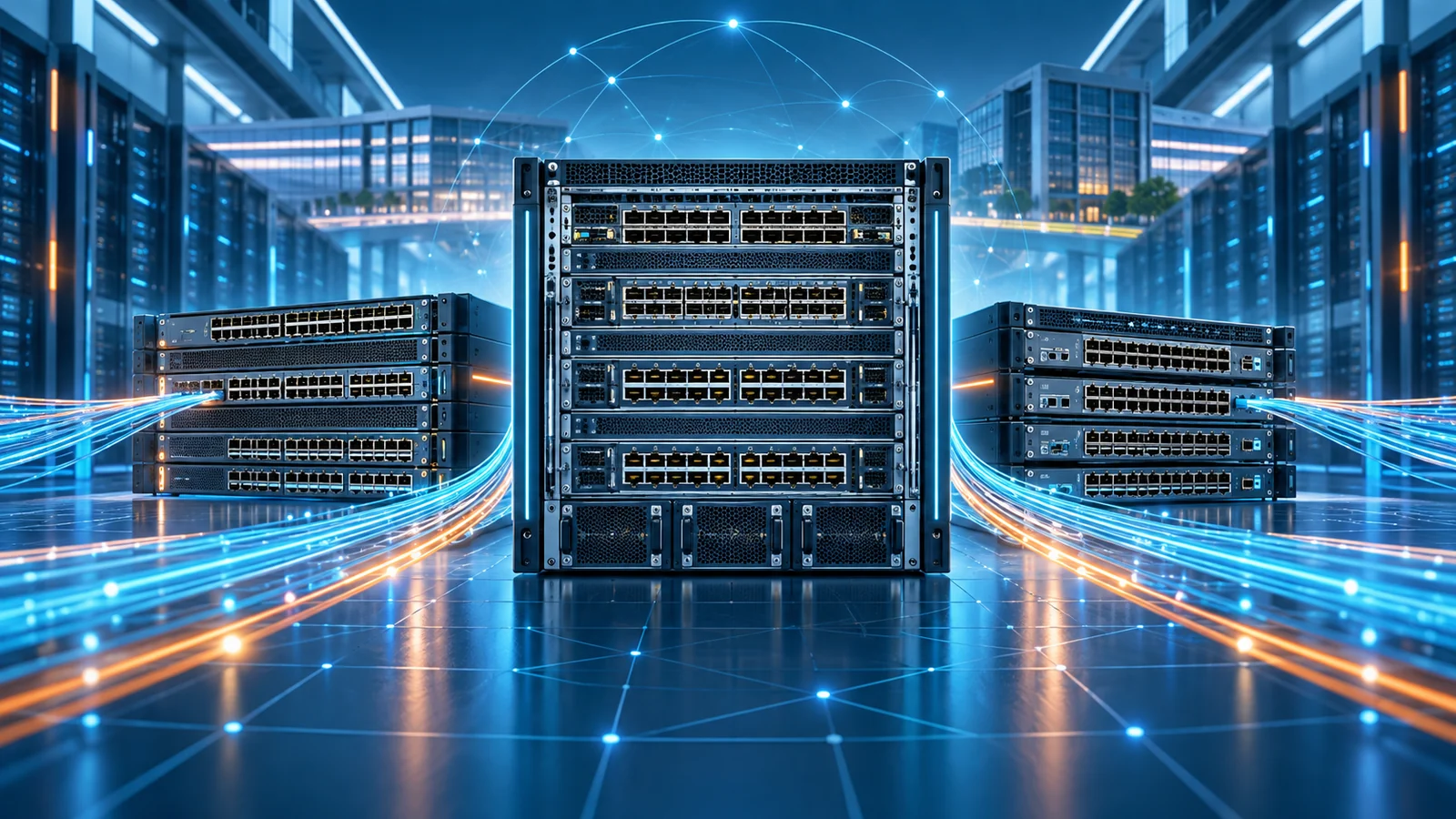
Cisco Nexus is the switching line built specifically for the data center. The current portfolio spans several tiers under the Nexus 9000 family - from compact, high-performance fixed switches up through modular chassis built for large-scale fabrics - all built on Cisco's custom silicon and designed to handle the dense, high-bandwidth, low-latency connections between servers, storage, and virtualized or containerized workloads. Nexus switches are the fabric that Cisco's Application Centric Infrastructure (ACI) is built on top of, and they're increasingly positioned around AI/ML cluster networking, where GPU-to-GPU traffic patterns push port speeds and buffering requirements well beyond what a campus network ever sees. Management at scale is handled through Cisco Nexus Dashboard rather than a per-device GUI, which matters once you're operating dozens or hundreds of leaf and spine switches instead of a handful of standalone units. If a switch's primary job is moving traffic between racks of servers and storage arrays rather than connecting people to the network, it almost certainly belongs in the Nexus family.
Cisco has also organized the current Nexus 9000 lineup into distinct tiers rather than one generic model line - compact fixed switches sized for smaller server rooms and top-of-rack deployments at one end, and large distributed modular chassis built for hyperscale-style fabrics at the other, with several tiers in between covering different port speed and density combinations. That range matters because a data center refresh rarely needs the largest chassis on day one; picking the right tier is closer to sizing a Catalyst refresh than it might first appear, just against a different set of variables - fabric bandwidth, buffer depth, and 400G/800G uplink capacity instead of PoE budgets and Wi-Fi density.
What Is Cisco Catalyst?
Cisco Catalyst is the switching line built for the campus - the part of the network where people, not servers, generate most of the traffic. The current Catalyst 9000 family spans entry-level access switches through core/aggregation-class fixed switches, plus ruggedized industrial models, and it's designed around the things a campus network actually needs: Power over Ethernet for access points, IP phones, and cameras; integration with Cisco's wireless portfolio (access points and WLC controllers); and centralized management through Cisco Catalyst Center or the Meraki dashboard rather than a data-center-style controller. Security in this world looks different too - features like identity-based access control (dot1x) and segmentation (TrustSec, SD-Access) are built around authenticating a laptop or a badge reader, not enforcing a data center micro-segmentation policy between application tiers. If a switch's primary job is giving end users, wireless APs, or endpoint devices a port to plug into, it belongs in the Catalyst family, not Nexus.
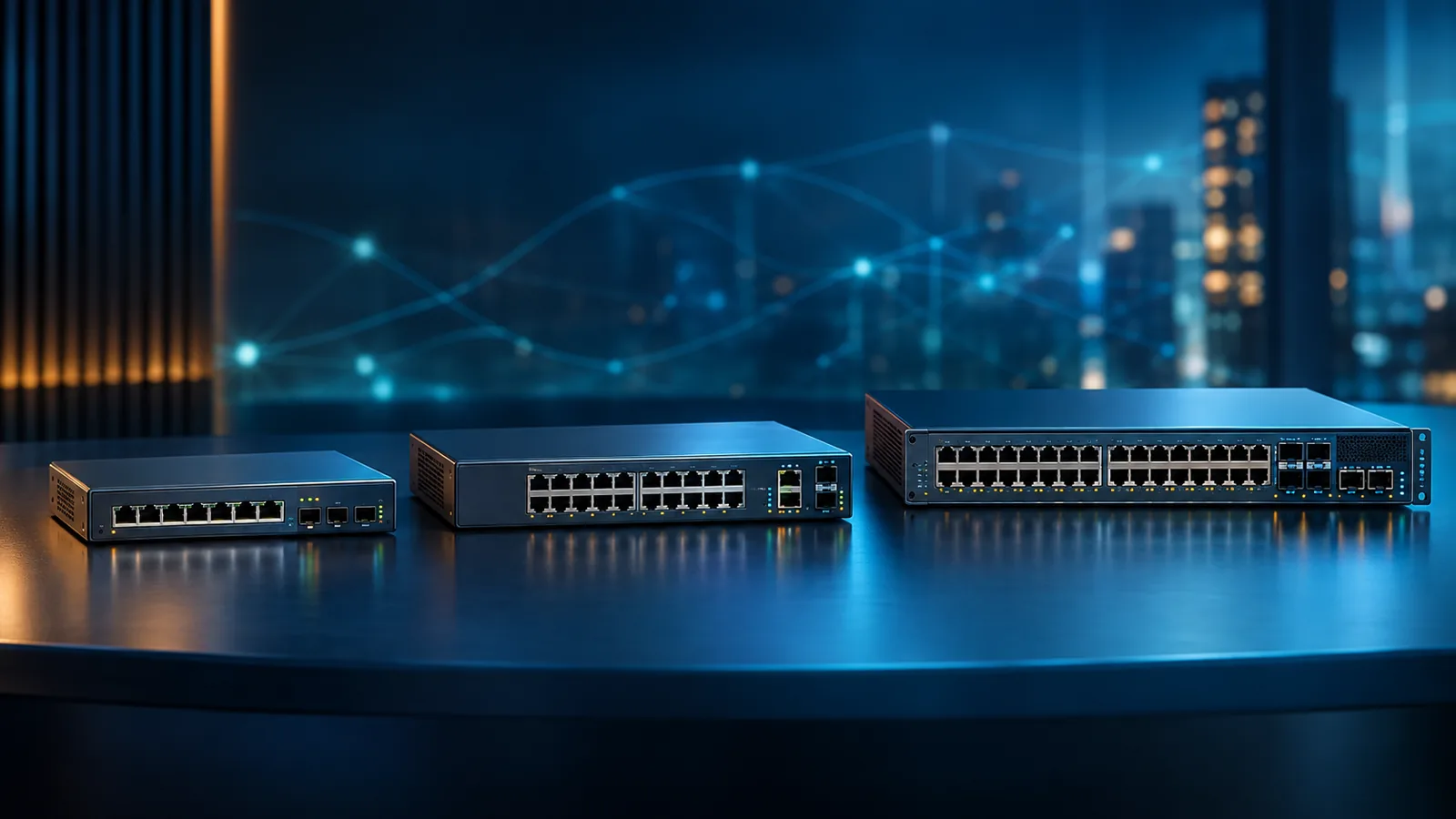
Like Nexus, Catalyst isn't a single model - it's a range of tiers aimed at different points in the campus. Entry-level fixed switches cover small branches and lower-density closets; a standard access-layer tier covers most mid-size and enterprise wiring closets with higher-bandwidth stacking and more PoE headroom; and fixed-core models handle aggregation and core roles with high-throughput uplinks rather than end-user port density. There are also ruggedized industrial models built to survive outdoor cabinets, manufacturing floors, and other environments a standard indoor switch was never designed for. The common thread across every tier is the same operating system and the same campus-oriented feature set - PoE, wireless integration, identity-based access - scaled up or down to fit the location.
NX-OS vs IOS XE: The Software Difference
The hardware differences between Nexus and Catalyst are really a downstream effect of a deeper split: the two platforms run different operating systems, built around different priorities.
NX-OS: Built for the Data Center
NX-OS is Cisco's data-center-focused network operating system, built on a Linux-based architecture and designed for the scale and automation a fabric needs. It supports the routing protocols and overlay technologies data center fabrics rely on - BGP, OSPF, and VXLAN EVPN overlays in particular - along with programmability features like RESTCONF/NETCONF and a JSON-based NX-API, container support, and SDKs for scripting against the switch directly. High availability is a first-class design goal: NX-OS supports in-service software upgrades (ISSU) and process-level fault isolation so a fabric can be patched and maintained without a full outage, which matters a lot more when hundreds of servers are depending on that fabric staying up than it does in a wiring closet.
IOS XE: Built for the Campus (and Branch)
IOS XE is Cisco's modern operating system for enterprise switching, wireless, and routing - it runs not just on Catalyst switches but also on Catalyst wireless access points and controllers, and on Cisco's ISR/ASR and Catalyst 8000 routers. Cisco markets it around three themes: connecting (resilience and uptime), securing (built-in threat defense), and automating (scripting and orchestration across the fleet). For a campus network, that translates into features like simplified stacking, zero-touch provisioning for a new branch switch, and tight integration with wireless and security policy - priorities that reflect a network whose main variable is "how many people, devices, and access points are connecting today," not "how many petabytes are moving between racks tonight."
Spine-Leaf, VXLAN, and ACI: Where Nexus Fits
Most modern Cisco data center designs use a spine-leaf topology: every leaf switch (where servers and storage connect) has a link to every spine switch, and there are no direct leaf-to-leaf or spine-to-spine connections. That structure gives predictable, low-latency paths between any two servers in the fabric and lets you scale capacity by adding more spines rather than redesigning the topology. Nexus 9000 switches are the switches Cisco builds this topology out of, and they typically run a VXLAN EVPN overlay on top of the physical spine-leaf fabric - VXLAN lets you stretch a Layer 2 segment across the fabric over a Layer 3 underlay, which is what allows a virtual machine or container to migrate between physical racks without changing its IP address or losing its network policy.
Cisco's Application Centric Infrastructure (ACI) builds on top of this same Nexus 9000 spine-leaf foundation, adding a centralized policy controller (APIC) that lets network, security, and application teams define connectivity and segmentation as policy rather than box-by-box configuration. You don't have to run ACI to use Nexus switches - plenty of data centers run Nexus in a more traditional NX-OS CLI-managed VXLAN EVPN fabric without the ACI policy layer - but if a design calls for ACI specifically, Nexus 9000 hardware is the only place that conversation starts.
It's worth being clear about what VXLAN is actually solving, because it's easy to treat it as jargon rather than a real design constraint. In a traditional Layer 2 campus-style network, stretching a VLAN across multiple switches means trusting spanning tree to prevent loops, which caps how large and how resilient that Layer 2 domain can practically be. VXLAN sidesteps that by routing everything at Layer 3 between leaf and spine switches and tunneling the Layer 2 segment as an overlay on top, with EVPN handling the control plane that tells every leaf switch where a given MAC or IP address currently lives. The practical benefit is that a data center fabric can scale to far more racks and far more virtual segments than a flat Layer 2 design could support, without giving up the ability to move a workload between any two racks in the fabric transparently.
Campus Access, Distribution, and Core: Where Catalyst Fits
Campus networks are usually still described in terms of the classic three-tier model - access, distribution, and core - even though many mid-size networks now collapse distribution and core into a single layer. Catalyst covers all of it: entry-level access switches for small branches and lower-density closets, a standard access-layer workhorse tier for most wiring closets, and fixed-core switches for aggregation and core roles with high-throughput uplinks. What ties the tiers together is that they're all designed around the same basic job - authenticating and powering end devices, then getting that traffic up to where it needs to go - rather than moving huge volumes of server-to-server traffic laterally.
Power over Ethernet is a bigger design factor here than it typically is in a data center: a wiring closet refresh has to budget power for Wi-Fi 6/6E access points, PTZ security cameras, and IP phones, not just port count. Cisco's SD-Access architecture, which layers software-defined segmentation and automation on top of the physical Catalyst switches, is the campus-side equivalent of what ACI does in the data center - policy-based, centrally managed connectivity - but it's built around campus traffic patterns and managed through Catalyst Center rather than APIC.
Wireless is the other piece that makes campus design different from data center design. A modern Catalyst deployment is rarely just switches - it's switches feeding power and uplink bandwidth to access points, with the switch, the AP, and often the wireless controller all running the same IOS XE software family so policy and troubleshooting stay consistent from the wired port to the radio. That tight coupling is part of why Catalyst hardware and licensing decisions tend to get made alongside wireless planning rather than in isolation: undersizing PoE budget or uplink capacity on the access switch caps what the wireless network above it can actually deliver, regardless of how capable the access points themselves are.
Nexus vs Catalyst Side-by-Side
| Attribute | Cisco Nexus | Cisco Catalyst |
|---|---|---|
| Primary environment | Data center | Campus / branch |
| Operating system | NX-OS | IOS XE |
| Typical topology | Spine-leaf fabric | Access / distribution / core |
| Dominant traffic pattern | East-west (server-to-server) | North-south (endpoint-to-network) |
| Overlay / fabric technology | VXLAN EVPN, optional ACI | SD-Access (optional) |
| Centralized management | Cisco Nexus Dashboard | Cisco Catalyst Center / Meraki dashboard |
| Power over Ethernet | Not a primary design factor | Core requirement (APs, phones, cameras) |
| Typical connected devices | Servers, storage arrays, hypervisor hosts | Laptops, phones, access points, cameras |
How to Decide Which One You Need
Most of the time the decision is simpler than it looks, because it comes down to one question: what's physically connecting to this switch? If the answer is servers, storage, hypervisor hosts, or another data center switch in a spine-leaf fabric, you're looking at Nexus - the traffic pattern, throughput expectations, and overlay requirements (VXLAN, possibly ACI) all point that direction. If the answer is laptops, desk phones, access points, printers, or security cameras, you're looking at Catalyst - PoE budgets, wireless integration, and identity-based access control are the priorities, not east-west fabric throughput.
A second useful question is who else is going to touch this switch's configuration and policy. A data center team managing a fabric through Nexus Dashboard and thinking in terms of VXLAN segments and ACI tenants is solving a different problem than a network team managing wiring closets through Catalyst Center and thinking in terms of VLANs, SSIDs, and access policies. Trying to force one team's tooling onto the other's switches - or one platform's OS onto the other's job - tends to create more operational friction than it saves.
In reality, most mid-size and larger organizations run both: Nexus in the data center or server room, Catalyst everywhere users and endpoints connect, tied together with a routed uplink between the two environments. That's not a compromise - it's the intended design. The question worth spending time on isn't "Nexus or Catalyst," it's "which tier of whichever platform actually fits this specific role," which is where digging into the specific series (9200 vs 9300 vs 9500 on the Catalyst side, or the specific Nexus 9000 tier on the data center side) becomes the more useful conversation.
Checking Current MSRP
Whether you're pricing a data center fabric refresh or a campus wiring closet, it's worth checking current MSRP for the exact part numbers involved before requesting quotes: browse the full Cisco switches catalog on GlobalPriceList.com, updated daily, to search by part number instead of relying on a reseller's PDF that may already be out of date.
Related Cisco guides: If the target is a campus rather than a data center, compare Catalyst access and core tiers and the higher-capacity options in the Catalyst 9000X guide.
Sources
- Cisco Nexus 9000 Series Switches - Cisco
- Cisco Catalyst 9000 Switching Family - Cisco
- Cisco NX-OS Software Data Sheet - Cisco
- Cisco Application Centric Infrastructure (ACI) - Cisco
- Cisco IOS XE Software - Cisco
FAQ
What is the main difference between Cisco Nexus and Catalyst switches?
Nexus switches run NX-OS and are built for the data center - high-throughput, server-to-server traffic in spine-leaf fabrics, often with VXLAN or ACI. Catalyst switches run IOS XE and are built for the campus - connecting end users, access points, and phones, with PoE and identity-based access control as core features.
Can a Catalyst switch replace a Nexus switch in a data center?
Not for a proper data center fabric. Catalyst switches aren't designed around the deep buffering, east-west throughput, and VXLAN EVPN/ACI overlay support that Nexus and NX-OS provide, so using Catalyst for a server/storage fabric typically creates performance and scaling problems as the environment grows.
Do I need both Nexus and Catalyst switches?
Most mid-size and larger organizations do - Nexus in the data center or server room, and Catalyst throughout the campus wherever users, wireless access points, and endpoint devices connect, with the two environments joined by a routed uplink.
Where can I check current pricing for Cisco Nexus and Catalyst switches?
GlobalPriceList.com's Cisco switches catalog is updated daily and lets you search by exact part number to see current MSRP before requesting a reseller quote.
Check Current Cisco Pricing
Browse the full, daily-updated Cisco GPL on GlobalPriceList.com.
View Cisco Price List